Pavimenti Sassuolo · Italian floors

Italian floor tiles for every room, chosen in the Sassuolo district

In Italian, pavimenti simply means "floors", and Sassuolo is the town at the heart of Italy's ceramic tile district. This guide helps you choose Italian porcelain flooring room by room, buying straight from the district and having it delivered on a pallet to your door in Europe.

Living room with Italian wood-effect porcelain floor tiles laid in a staggered pattern
Wood-effect Italian porcelain in a living room: the warmth of timber planks without the upkeep of real wood.
Chapter 01

Italian floor tiles, room by room

Every room asks something different of a floor: foot traffic, water, light, warmth. Before you fall for a surface, think about how you will live in that room every day. This is how we reason when we help a customer plan the floors of a whole house.

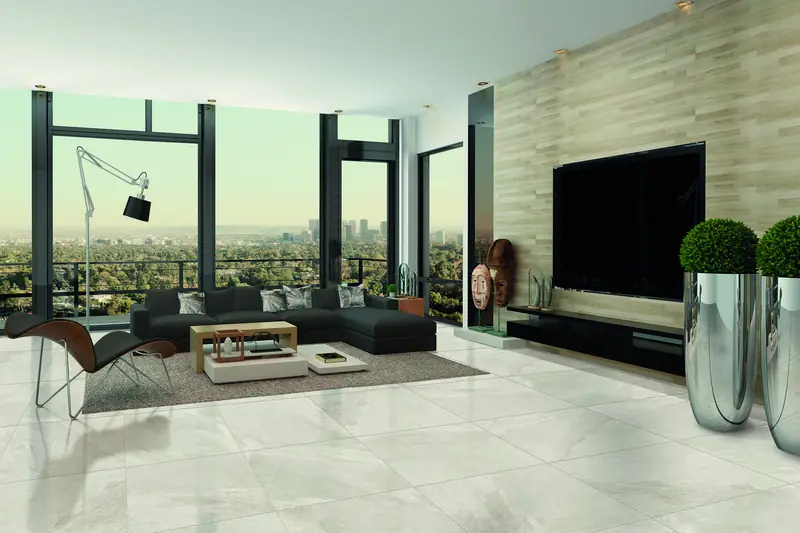
Bright open-plan living space with large-format light Italian porcelain flooring

Living room and open-plan spaces

In the living area the floor is the backdrop to everything else: the sofa, the open kitchen, the dining table. That is why continuous surfaces work so well here, with few grout lines and colours you will not tire of. In larger rooms, 60x120 and 120x120 cm formats stretch the perspective and make the space feel bigger.

If the living room opens onto the kitchen, use the same floor throughout. One material with no thresholds ties the spaces together and makes cleaning easier.

Our adviceLarge-format stone- or concrete-effect porcelain, matt finish, thin grout in a matching tone.
See the large slabs
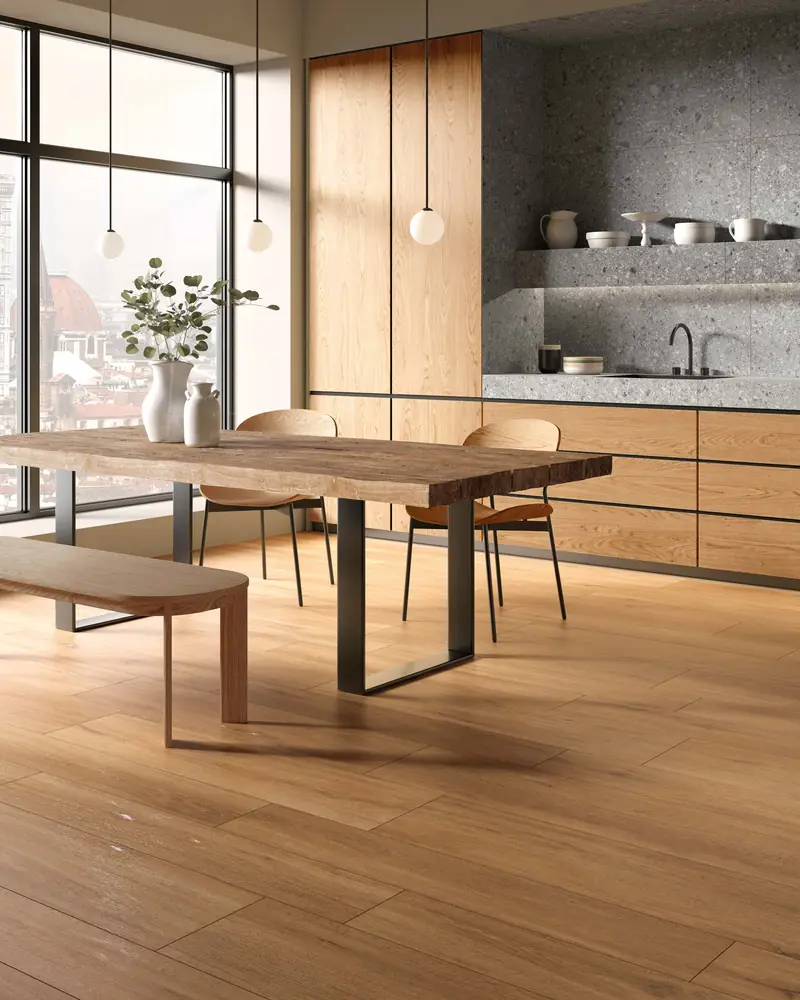
Kitchen with a wooden table and natural wood-effect porcelain floor tiles

Kitchen

The kitchen is the toughest room for any floor: water, oil, sauces, dropped pans. Porcelain stoneware is hard to beat because it does not absorb liquids, resists stains and can be cleaned with any detergent. That includes wood-effect porcelain, which brings warmth to the room with no worries about moisture.

Avoid very glossy surfaces near the hob: natural or lightly textured finishes hide smears and stay safer underfoot when the floor is wet.

Our adviceWood-effect porcelain planks in 20x120 cm, matt finish, grout close to the colour of the tile.
See wood-effect porcelain
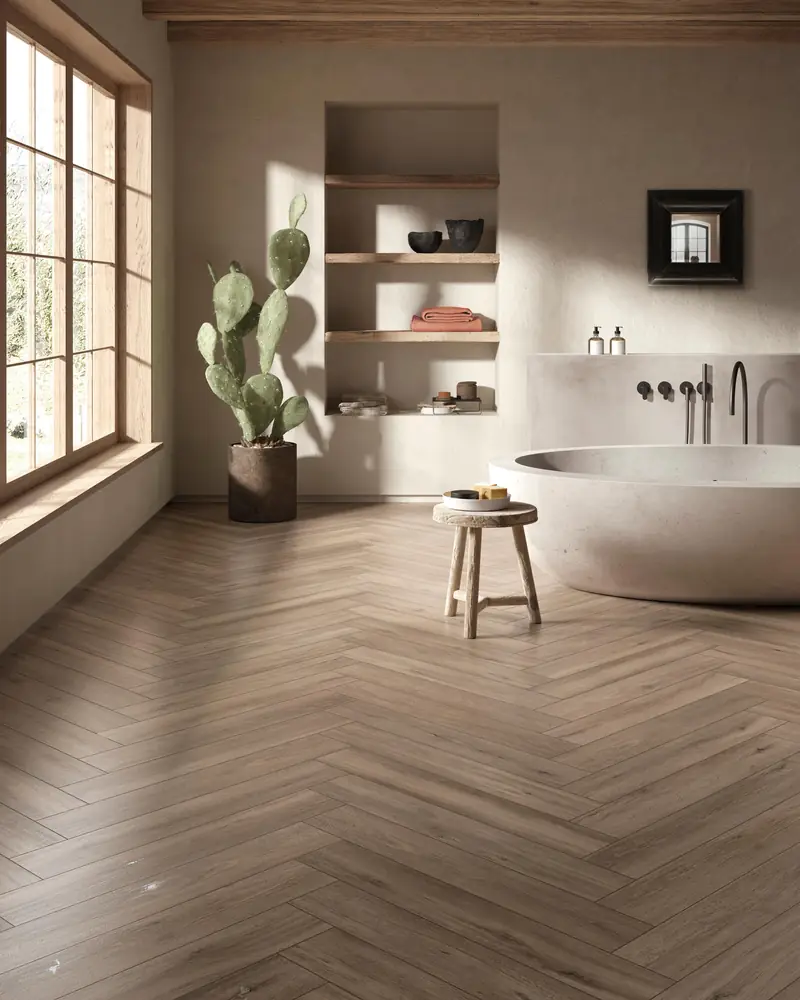
Bathroom with a freestanding bath and a wood-effect floor laid in herringbone

Bathroom

In the bathroom two things matter: safety and continuity. A slip-resistant floor in the shower area avoids nasty surprises, while using one material for floor and walls makes even a small bathroom feel more spacious.

The bathroom is also the room to be bold: a herringbone lay, a patterned encaustic-style tile or a marble effect can turn a few square metres into a room with real character, and the small surface keeps the project manageable.

Our adviceWood effect in herringbone or a marble effect; in the shower, a textured slip-resistant version.
See marble-effect porcelain
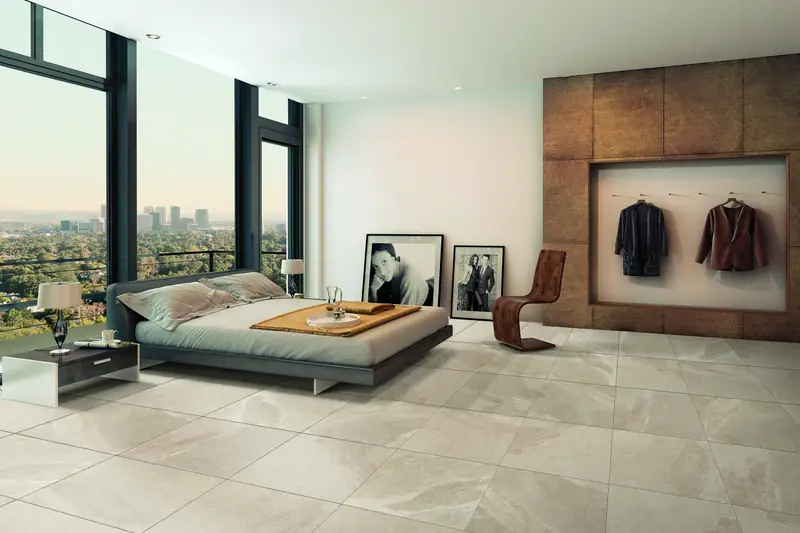
Bedroom with beige stone-effect 60x60 porcelain floor tiles

Bedroom

In the bedroom you walk barefoot and look for calm. Wood-effect porcelain in warm tones, perhaps with a rug, gives the cosy look of timber boards with the practicality of ceramics, and works perfectly with underfloor heating.

If the bedrooms are upstairs, think about impact noise too: an acoustic underlay below the screed and a rug reduce the sound that travels to the floor below.

Our adviceWood-effect porcelain in natural oak tones, or 60x60 cm porcelain in sand tones.
See wood-effect porcelain
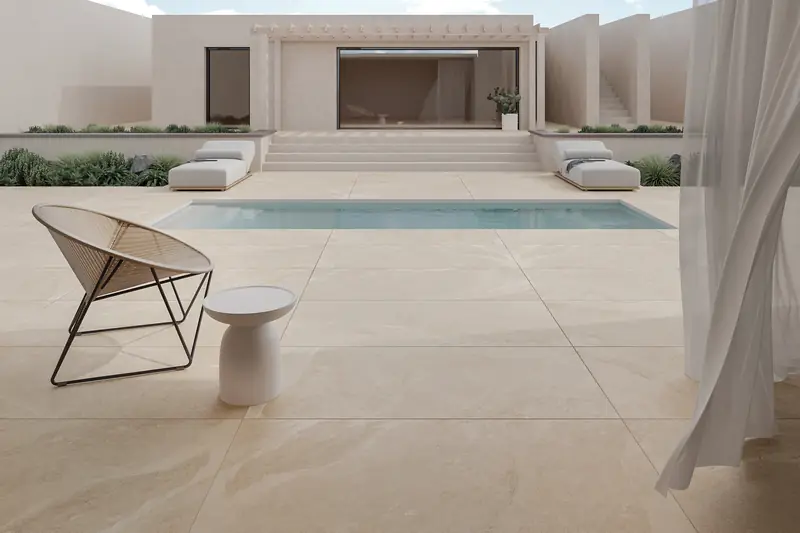
Pool surround and terrace paved with 20 mm outdoor porcelain tiles

Outdoors, terraces and pool surrounds

Outside, a floor has to stand up to frost, sun and rain without becoming slippery. Outdoor porcelain is frost-resistant and does not fade; the 20 mm thick version can even be laid dry on gravel, grass or adjustable pedestals, with no adhesive and no screed.

A designer's trick: choose the same shade outdoors as inside. With large windows, the living room and the terrace will read as a single space.

Our advice60x120 or 60x60 cm porcelain in 20 mm, textured surface, light colours that stay cooler in the sun.
See 20 mm outdoor porcelain
Chapter 02

Laying patterns at a glance

The same floor changes character depending on how it is laid. Pick a pattern to see what it looks like, which formats it suits and how much extra material to allow for cuts and offcuts.

Straight lay

Tiles are aligned in perfect rows, with the grout lines forming a grid. It is the simplest and quickest pattern to lay, looks tidy and contemporary, and is ideal for square formats.

Formats
60x60, 80x80, 120x120 cm
Waste
5–8%

Waste allowances are indicative and depend on the shape of the room: your consultant always checks the quantities before you order.

Chapter 03

Wood-effect porcelain or real wood: what really changes

Many people choose a wood-look floor because they love the warmth of timber boards. Here is an honest comparison between wood-effect porcelain, which we supply, and real wood, which remains the benchmark.

Indicative comparison between wood-effect porcelain and real wood
Wood-effect porcelainReal wood (benchmark)
Water and moistureDoes not absorb water: suits bathrooms, kitchens and outdoors tooDislikes standing water and damp
Scratches and knocksVery resistantScratches and needs sanding over time
InstallationBonded to a screed by a tiler, herringbone tooGlued or floating
Underfloor heatingExcellent: conducts heat wellInsulates more and slows the heat
MaintenanceMinimal: water and detergentDedicated products and regular care
UnderfootCool and solid; cosy with a rugWarm and natural
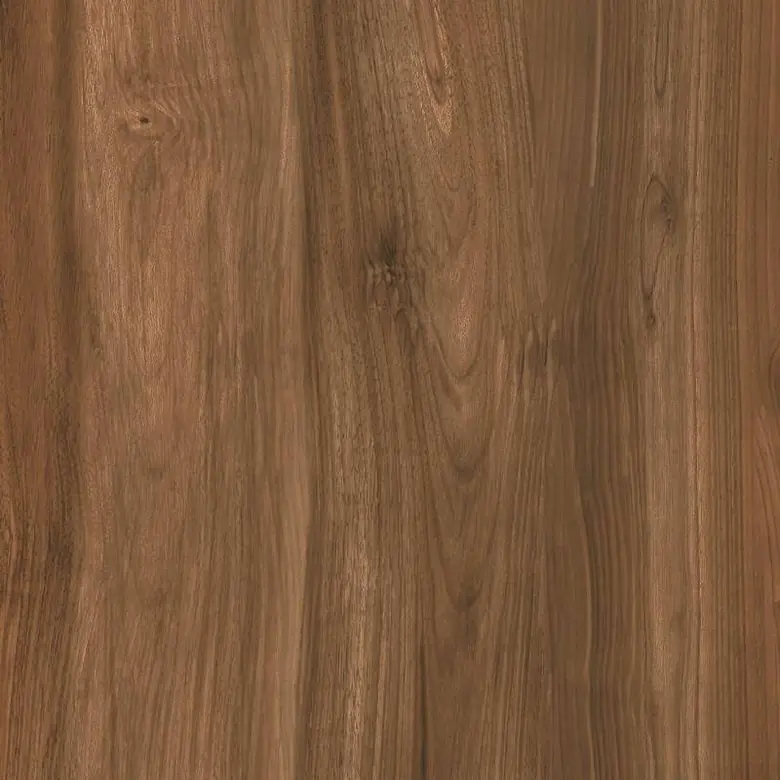
Close-up of walnut wood-effect porcelain tile in 20x120 cm format
Walnut wood-effect porcelain, 20x120 cm: grain and knots without the upkeep of wood.
“Wood-effect porcelain brings the warmth of timber boards to bathrooms, kitchens and underfloor heating too.”
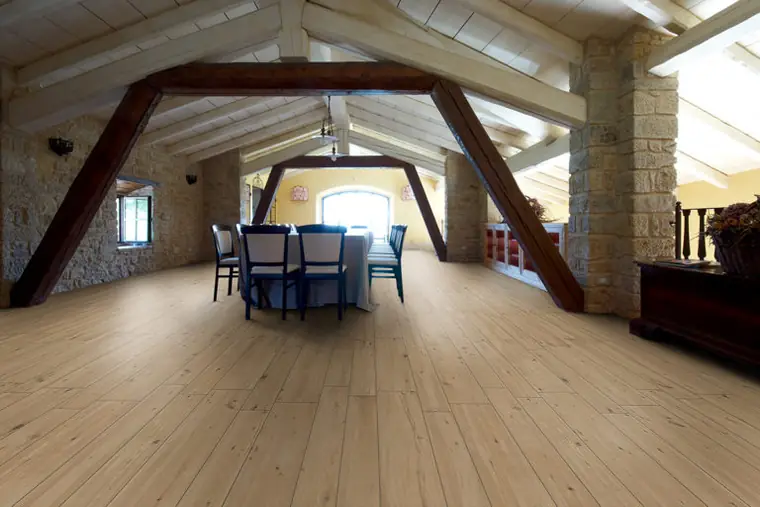
Attic room with exposed beams and a light wood-effect floor
Chapter 04

Floors and underfloor heating

Underfloor heating works best when the floor lets heat through quickly. Porcelain stoneware is the most suitable material: it is dense, conducts heat well, does not warp with temperature changes and lets the system run at lower temperatures, which saves energy.

  • Porcelain: suits every format; with thinner slabs the heat comes through even faster.
  • Wood-effect porcelain: the look of timber boards with the thermal performance of ceramics, unlike real wood, which insulates and slows the heat.

Whatever you choose, switch the system on gradually for the first time after laying, following the advice of your heating engineer and of the adhesive manufacturer.

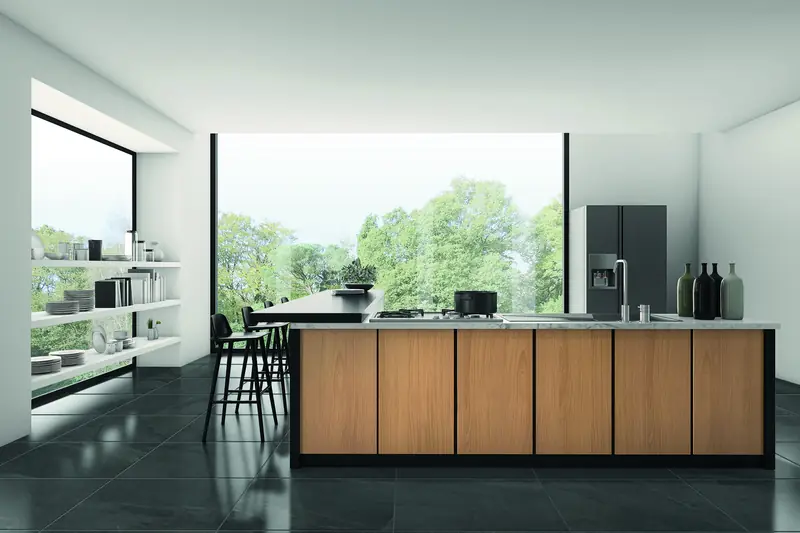
Renovated modern kitchen with anthracite 60x60 porcelain floor tiles
Chapter 05

A new floor without demolition

Ripping out an old floor means dust, rubble to dispose of, days of building work and a new screed. In many cases you can avoid it by laying the new floor directly over the existing one.

For this to work, the old floor must be flat, firmly bonded and free of tiles that sound hollow. Then the answer is thin porcelain tiles:

  • Thin porcelain tiles, bonded with an adhesive suitable for overlaying: they add only a few millimetres and stay as tough as traditional ceramics.

Before you decide, measure the clearance under doors and at thresholds to balconies and stairs: a few extra millimetres may mean trimming the doors. Ask a consultant which items are available in reduced thickness.

Adhesives and installation products
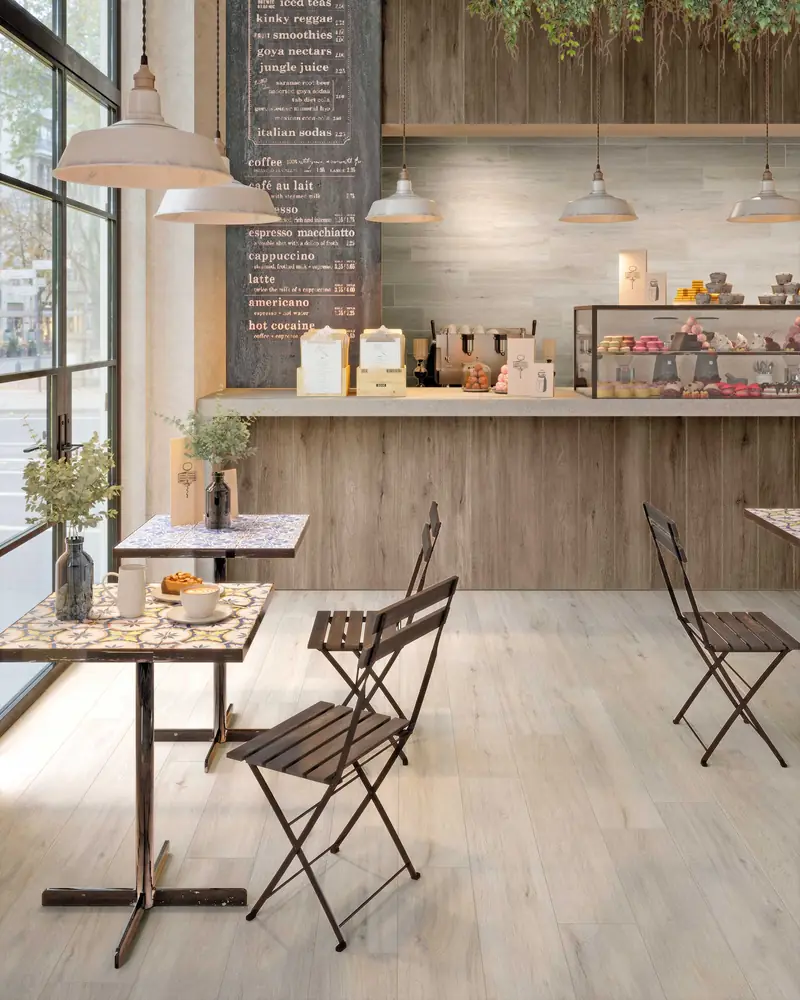
Room with whitewashed wood-effect porcelain tiles and tone-on-tone grout
Chapter 06

Choosing the grout colour

Grout is the detail people think about last, yet it changes the final result more than you would expect. There are three golden rules:

  • Matching tone for a seamless look and for large formats: the joints almost disappear.
  • Lighter only where little dirt gets in: in kitchens and hallways it tends to darken.
  • Contrasting to bring out the design of a herringbone lay or a patterned tile.

Rectified tiles, with perfectly squared edges, allow very thin joints of around 2 mm. Non-rectified tiles need slightly wider joints.

Chapter 07

From the Sassuolo district to your door

Ceramiche Sassuolo has been selling floor and wall tiles since 2010 from Castellarano, one of the towns of the ceramic district between Modena and Reggio Emilia in northern Italy. Buying here means choosing Italian porcelain at district prices, with a consultant who follows your order from the first question to delivery.

  • Quote and advice

    Tell us what you need by phone or email: a consultant checks availability and quantities and sends you a quote with transport included.

  • Delivery across Europe

    Insured pallet shipping with Palletways to Italy and 24 European countries. Delivery times depend on the destination and are confirmed in your quote.

  • Showroom and collection

    See the surfaces in person in Castellarano, or collect your order from the warehouse: we tell you the weight and size in advance so you can arrange a suitable vehicle.

  • Installation

    Our partner installers work in Italy only. Abroad, any experienced local tiler can lay Italian porcelain: your consultant can answer technical questions about the material.

Ceramiche Sassuolo Srls
Via Allegri 60, 42014 Castellarano (RE), Italy
Call +39 327 008 5526 Get directions
Chapter 08

Italian floor tiles: frequently asked questions

Do you deliver Italian floor tiles outside Italy?

Yes. Ceramiche Sassuolo ships on pallets with Palletways to Italy and 24 European countries. Delivery times and transport depend on the destination country and on the quantity, and are confirmed in your quote.

Can I see the floors before I buy?

Yes. The showroom and warehouse are at Via Allegri 60, Castellarano (RE), in the Sassuolo ceramic district in northern Italy. Contact a consultant first so the materials you want to see are ready for you.

Do you install floors outside Italy?

No. Our network of partner installers works in Italy only. Outside Italy any experienced local tiler can lay Italian porcelain tiles, and your consultant can answer technical questions about the material you have chosen.

Which floor is best with underfloor heating?

Porcelain stoneware is the most efficient choice because it conducts heat well and is not affected by temperature changes. Wood-effect porcelain performs just as well, unlike real wood, which insulates more.

Can a new floor be laid over the old one?

Often yes, if the existing floor is flat, firmly bonded and has no hollow-sounding tiles. Thin porcelain tiles avoid demolition: check door and threshold heights, use a suitable adhesive and ask a consultant which items are available.

Wood-effect porcelain or parquet in the kitchen?

In the kitchen wood-effect porcelain is the practical choice: it is not afraid of water, stains or dropped pans and can be cleaned with any detergent. Real parquet feels warmer but needs more care and maintenance over time.

More answers in the Ceramiche Sassuolo FAQ and on the shipping and laying service pages.

Planning a new floor? Let's talk it through